
6.2 Type of Problem Set
The core purpose of a problem set is to target a specific skill gap. EdisonOS gives you structural tools through problem set types to control how questions are delivered and how difficulty adapts to each student.
Problem Set Types
When creating a problem set, you must select one of three types. Each serves a different instructional purpose.
Linear Questions are delivered in a fixed order. Every student who takes this problem set will see the same questions in the same sequence. Best for structured, teacher-directed practice where consistency matters.
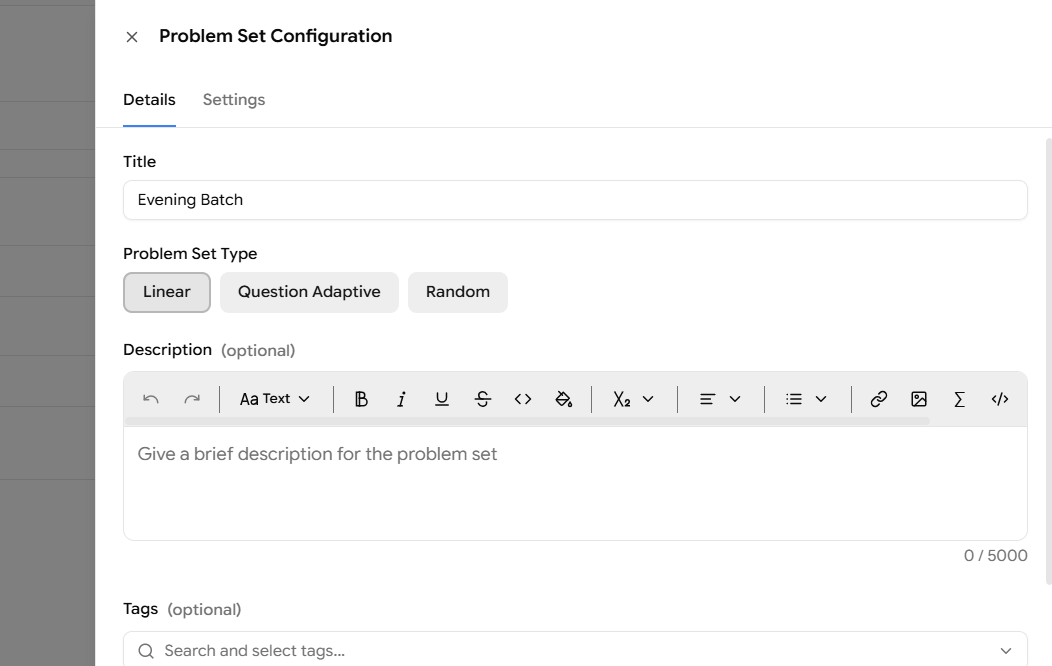
Use Linear when you want full control over the question order for example, scaffolding from easier to harder questions deliberately.
Random Questions are shuffled each time the problem set is taken. Two students sitting next to each other will see the same questions but in a different order. This discourages answer sharing and keeps repeat attempts fresh.
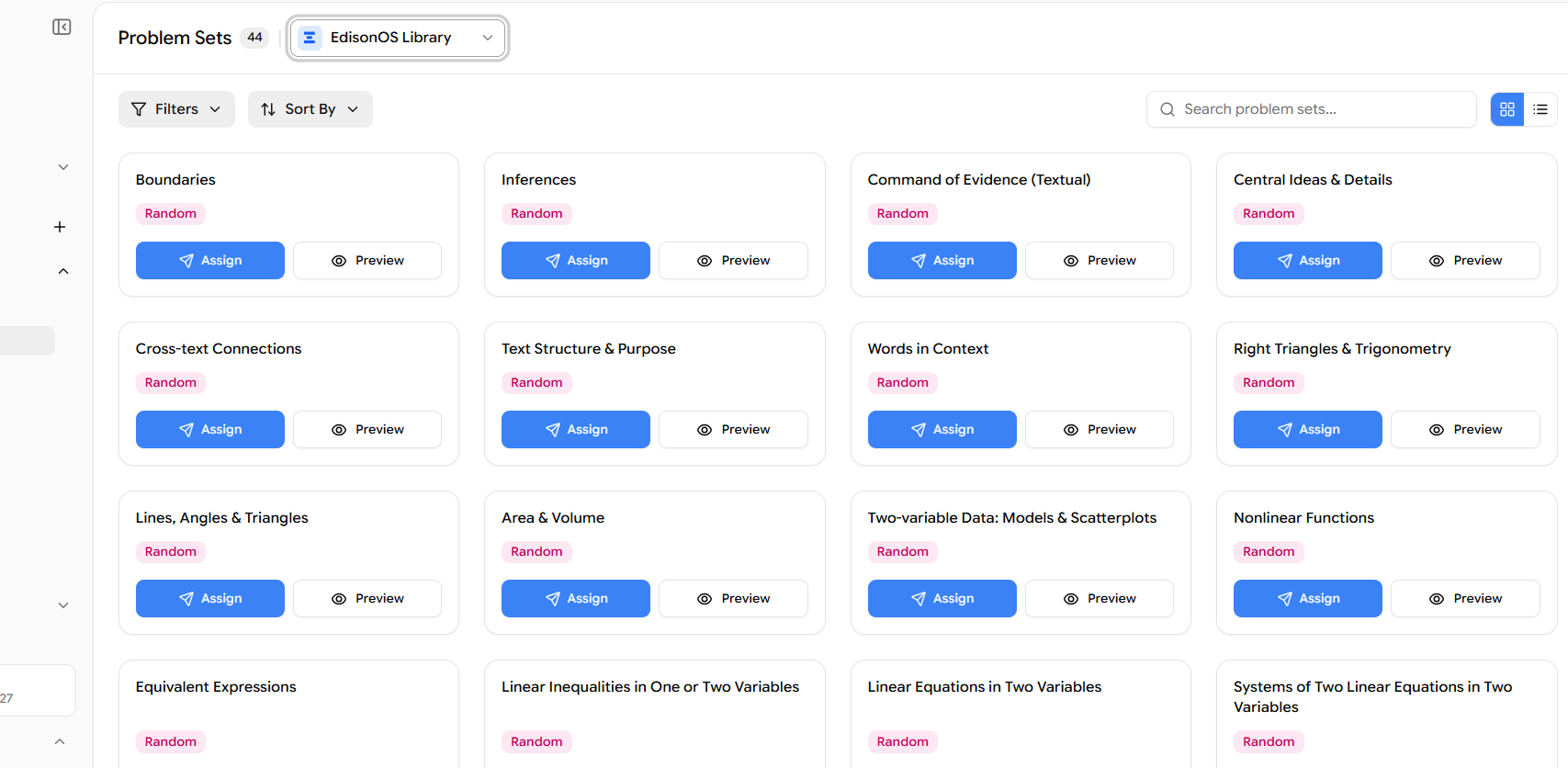
Random is ideal for homework or independent practice where you want to reduce the chance of students copying from one another.
Adaptive (Question Adaptive) The difficulty of each question is determined by the student's performance on the previous question. Based on whether a student answers correctly or incorrectly, EdisonOS automatically adjusts the difficulty level of the next question, providing a more personalized assessment experience. Students who perform well receive more challenging questions, while those who need additional support receive questions better suited to their current skill level.
Question Adaptive tests adjust the difficulty of each question based on the student's previous response, creating a personalized assessment experience.